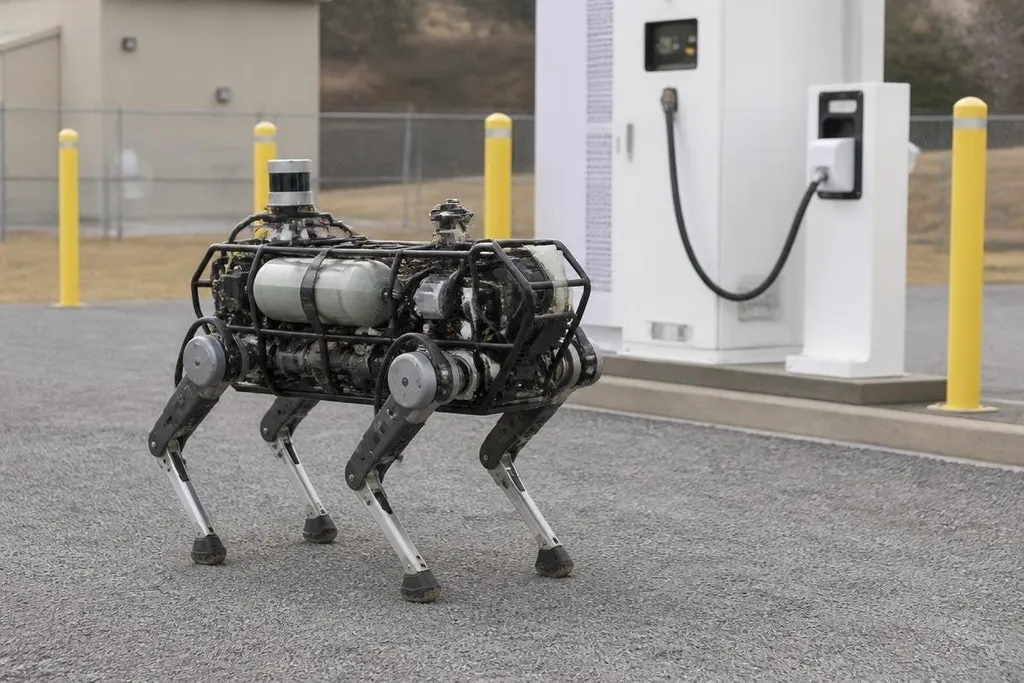
A hydrogen fuel cell can turn stored hydrogen into electricity, with water and heat as its main outputs. For a robot, that changes the refueling problem while adding tanks, sensors, and new safety work. The useful question is where those trade-offs fit the job.
Quick read
- Fuel cells suit robots that need long runs and short refueling stops.
- A fuel-cell stack works best with a battery for sudden power demand.
- Storage, supply, ventilation, and maintenance can outweigh the benefit.
How the power system works
A fuel cell does not burn hydrogen inside the robot. The stack feeds hydrogen to one side and oxygen from the air to the other, then creates an electric current through an electrochemical reaction. Water and heat leave the process.
That electricity can run motors, computers, cameras, and wireless equipment. A battery can sit beside the fuel cell to handle sharp changes in demand, such as a robot lifting a load or climbing a ramp. The fuel cell then runs at a steadier output instead of chasing every motor surge.
Hydrogen also needs a way into the machine. A robot may carry compressed gas in a tank, use liquid hydrogen at very low temperature, or store hydrogen in another material. Each choice changes the robot’s mass, shape, service needs, and operating rules.
The tank is part of the robot’s working design, not an accessory. A tall tank can affect balance. A heavy tank can reduce payload. A large tank can take space that would otherwise hold tools, batteries, or sensors.
Where hydrogen makes sense
Hydrogen becomes more useful when a robot must work for long periods and cannot spend much time attached to a charger. A fuel-cell system can keep making electricity while the robot receives hydrogen, so the machine may return to work without waiting for a long battery charge.
That could suit outdoor inspection robots, remote machines, or vehicles working across several shifts. The fit depends on the robot’s load, duty cycle, refueling setup, and access to hydrogen. A small indoor robot that returns to a charging dock has a much easier power arrangement with a battery.
The source of the hydrogen also matters. Making hydrogen with electricity takes energy before the gas reaches the robot. Moving, compressing, and storing it adds more equipment and energy use. A clean operating result depends on the full supply chain, not only on the water leaving the fuel cell.
Hydrogen projects need evidence from robots in service, not only fuel-cell test rigs. Robot24.com's robotics reporting can connect a machine's task, tank size, refueling time, and site conditions to the power claim. That record leads into the harder question: where do hydrogen systems add weight, heat, and safety work?
Where the plan gets difficult
Hydrogen storage needs careful handling. Tanks, valves, leak sensors, ventilation, shutdown controls, and refueling procedures all become part of the system. A robot operating indoors may need extra rules for gas detection and air movement.
Fuel cells also have limits. They need time to reach their working condition, they produce heat, and their output can change with temperature, air supply, water management, and load. A battery can respond quickly, so a hybrid system often makes more sense than a fuel cell working alone.
The open question is service life in the robot’s actual duty cycle. A fuel cell that runs well in a controlled test may face dust, vibration, cold starts, repeated load changes, and long periods at low output in the field. Those conditions need measured operating data, not a short demonstration.
I'd choose hydrogen only when long operating time and fast refueling matter more than system size and supply work. For most small indoor robots, a battery remains the easier system to install, charge, inspect, and replace.
A practical buying check
Before choosing hydrogen power for a robot, check these points:
- Map the duty cycle: record working time, idle time, peak loads, and daily stops.
- Measure the full mass: include the tank, fuel-cell stack, controls, cooling parts, and safety hardware.
- Plan the site: confirm hydrogen delivery, storage, ventilation, leak detection, and emergency shutdowns.
- Test the hybrid system: check how the battery handles motor starts, lifting, braking, and radio use.
- Set service targets: ask who will inspect the stack, valves, sensors, and tank, and how often.
- Compare the whole system: include fuel, infrastructure, training, downtime, and disposal costs.
Hydrogen can give a robot a useful way to keep working when charging time limits the job. The decision should wait until the tank, fuel supply, safety controls, and field duty cycle fit the same design. For a robot that cannot justify that extra system, hydrogen adds work without solving the main problem.